

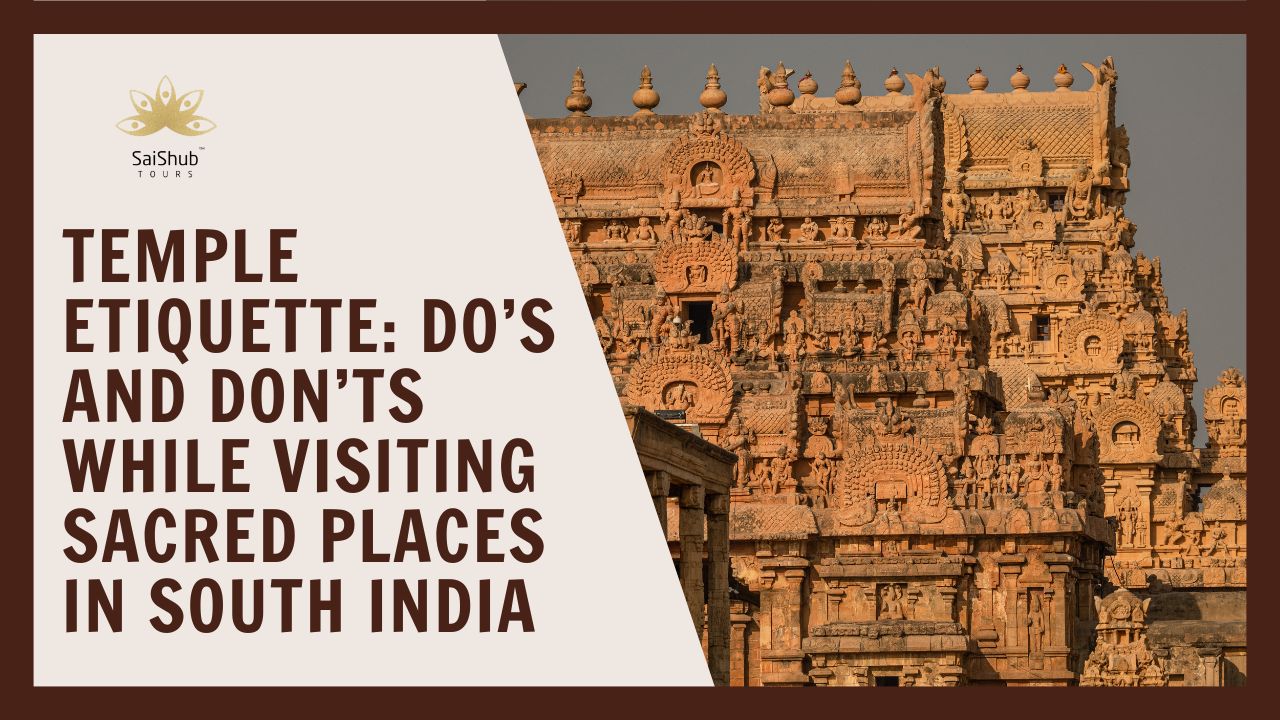
South India is home to some of the most magnificent temples in the world, each carrying centuries of history, devotion, and cultural heritage. A visit to these temples is not just about sightseeing—it’s a spiritual experience. To truly honor the sanctity of these sacred spaces, it’s essential to follow the right temple etiquette. Whether you are a first-time visitor or a regular devotee, understanding the do’s and don’ts will make your pilgrimage more meaningful and respectful.
Do’s While Visiting South Indian Temples
1. Dress Modestly and Appropriately
Most South Indian temples follow strict dress codes. Men are often expected to wear traditional attire like dhotis or mundus, while women are encouraged to wear sarees or salwar kameez. Avoid short or revealing clothing.
2. Remove Footwear Before Entering
It is customary to leave your shoes outside the temple premises. Many temples provide footwear stands, so ensure you comply before entering the sanctum.
3. Maintain Silence and Respect
Temples are places of worship and meditation. Keep conversations to a minimum, switch mobile phones to silent mode, and avoid any disruptive behavior.
4. Follow Rituals and Customs
Every temple has unique traditions—like clockwise circumambulation (pradakshina), standing in queues for darshan, or participating in aarti. Respect and follow these customs, even if you are unfamiliar.
5. Offer with Devotion
If you are carrying offerings like coconuts, flowers, or fruits, make sure they are fresh and clean. Hand them over respectfully at designated counters.
Don’ts While Visiting South Indian Temples
1. Don’t Take Photos in Restricted Areas
Many temples prohibit photography inside the sanctum and prayer halls. Always check signs or ask temple authorities before clicking pictures.
2. Don’t Consume Alcohol or Non-Veg Before Visiting
It is considered disrespectful to visit temples after consuming alcohol or non-vegetarian food. Temples encourage purity of body and mind.
3. Don’t Touch the Deity or Sacred Objects
Unless permitted, refrain from touching idols, holy lamps, or sacred ornaments. These items are reserved for temple priests and rituals.
4. Don’t Jump Queues or Rush Darshan
Temple visits often involve long queues, especially in Tirupati or Rameswaram. Respect the order and avoid pushing or rushing.
5. Don’t Disrespect Temple Staff or Volunteers
Temple staff manage large crowds with devotion and patience. Always cooperate with them instead of arguing or breaking rules.
Why Following Etiquette Matters
South Indian temples are not just monuments—they are living traditions where millions find solace, peace, and blessings. By respecting the customs, you not only enhance your spiritual journey but also ensure the preservation of temple culture for future generations.
FAQ
Most South Indian temples require modest clothing. Men may need to wear dhotis or mundus, while women are encouraged to wear sarees or salwar kameez.
Photography is usually restricted inside the sanctum and prayer halls. Always check the temple’s rules before clicking pictures.
Yes. It is advised not to consume alcohol or non-vegetarian food before visiting a temple, as purity of body and mind is considered important.
Yes, most temples are open to all visitors. However, some temples may have restricted entry to the inner sanctum for non-Hindus.
Temple etiquette ensures respect for traditions, priests, and devotees. It preserves the sanctity of sacred places while enhancing your spiritual experience.
Conclusion
Visiting temples in South India is a soulful experience that blends spirituality, architecture, and culture. By following the right do’s and don’ts, you honor the sanctity of these sacred spaces and make your pilgrimage truly rewarding. Remember—temple etiquette is not about restrictions, but about respect.